Showing posts with label winterization. Show all posts

Thursday, February 14, 2013

It's Routine for You, Why Not Your Car?


How dirty is your car right now? Not the inside, but the exterior. Are you a regular car washer or do you wait until you can barely see out the windows or the door is stuck with grime and slime?

If you are the later, you are actually hurting your car and taking years off of its life. The dirt, oil, debris, and salt used in winter for snow and ice can wreak havoc on your paint job. Keeping your car free of all that junk on a regular basis will keep it from eating away at the body panels. A monthly bath will keep your car’s exterior alive a little longer and save you cash on paint and body work! 

And, don’t forget the worst for your car’s exterior – bird droppings. You shouldn’t let it sit there until it rains. After 24 hours, acid starts to seep from it and damages your paint.  Wash the droppings off immediately.

Routine maintenance for your car and truck doesn’t only involve oil changes, tire rotations and valve replacement. Your car would love a monthly bath!


Wednesday, December 26, 2012

Avoiding Costly Repairs in Winter


While we would love to take care of your car should anything happen, we would rather you not get into a horrible accident during the winter and be forced to see us.  Maintenance is one thing. Repair because of an accident is another.

Avoid this!
 So, here are a few tips to avoid costly repairs while driving in winter conditions.

Check your tires:  you will lose 1 pound of tire pressure for every 10 degree drop in temperature.  Check your tire pressure RIGHT NOW!  Maintaining proper tire pressure help with traction AND improve your fuel economy. Also, even if you have all-season tires, you need to watch your speed. These tires also have reduced performance at cold temperatures.

Check your fluids:  We recently wrote about the importance of checking fluids before it started getting too cold. If you haven’t yet, do it now…with windshield-washer fluid being key right now.  Also, keep your gas tank at least half filled. Your lines could freeze.

Be Prepared to Dig Out: If you spin out into a snow bank or even off the side of the road in a little bit of ice and snow, do not let your wheels spin in an attempt to get out. Have a shovel in the trunk and sand to help with traction. You can even use kitty litter thrown under the tire to help.

Keep Your Eyes on the Road: Potholes, debris…hidden in the snow. If you hit something like a pothole, be prepared for some bent rims or axles as well as alignment issues. And, be weary of ice flying off of cars in front of you. That can damage the windshield.

Friday, October 19, 2012

Forgetting the “Other Fluids”


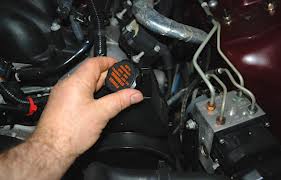
It’s a simple, yet costly, mistake for any car owner – forgetting the other fluids that keep your car running. Sure, we all see the sticker on our windshield that reminds us to get the oil changed every 3-5 months or 3,000-5,000 miles. But, what about checking you coolant? How about the ATF (Automatic Transmission Fluid)? What do you think helps your brakes?

Checking ALL Fluids is a must!

Antifreeze is what absorbs the heat from the engine and radiates it out of the car. It’s either happened to us or we see someone on the side of the road, hood up, smoke pouring out. The number one cause of all roadside failures has to do with the coolant. Coolant needs to be replaced because, over time, the additives in the coolant break down and cause corrosion. We recommend flushing the cooling system every two years or at 30,000 miles. You can always ask one of our technicians to check to make sure everything is OK with the system.

Automatic Transmission fluid is a tricky thing. Similar to oil, it cleans and holds contaminates while also lubricating the transmission. It also has to handle high amounts of heat or extreme cold. Most ATF can handle upwards of 600 degrees Fahrenheit. But, some parts of the transmission can go beyond 800 degrees! The trick with ATF is to know what your car needs. Car makers use different types of ATF depending on the type of car and how the transmission is supposed to handle. Look at your owner’s manual, or ask us to take a look. 

Your brakes, by far, are the most important part of the car. We don’t need to tell you that. Half of all drivers in the US surveyed recently said their brakes failing is something they think about at least once when driving in the car daily. While there is some debate about brake fluid flushes, it is important to consider having it done. If you drive 10,000 miles a year, you will, on average, use your brakes about 75,000 times. Water can accumulate in the fluid which causes heating issues. Too much water means the fluid cannot handle the high temperature brakes cause. Water can also cause vapor issues. If you ever put your foot all the way down to the floor and the brakes are having a hard time taking hold, you have vapor issues with the fluid and need to get it flushed immediately.

We are all very busy. We forget to return phone calls, emails, to pick up groceries, etc. But, when it comes to safety, changing the fluids on your car shouldn’t be forgotten or put off!

Thursday, November 17, 2011

Winterization Special

Frost on the windshield this morning?  It's time to protect your vehicle from the coming winter and you can trust U.S. Automotive to perform a thorough winterization inspection, including inspecting all belts and hoses, heater operation and brakes, and testing coolant strength and ph levels.  We'll even shuttle you free to your home or office while we ensure your vehicle is ready for holiday travel and winter's freeze.  Call or contact us online here for your appointment.  We'll even save you money with this special U.S. Automotive Winterization offer: