Showing posts with label US Automotive. Show all posts

Friday, August 2, 2013

Little Pieces & Parts of Your Car that are Saving Your life & Money!


What can your car learn from an aluminum can?  Quite a bit, it seems.  While it doesn’t sound like that can provide much safety, the people that make soda cans and aluminum foil are getting into the car business.

Cars brakes

Here’s why:  Extra weight in your car means extra time to stop.  Extra time to stop means extra work for your brakes.  Extra work for your brakes means they wear out, and that’s where your safety comes in.

The trick is to create a car that is both lightweight, and also safe.  Aluminum manufacturers are teaming up with car manufacturers and they are finding out that people are willing to pay a little more money for a car that will get better gas mileage.  The heavy steel is being replaced by lightweight aluminum, while still offering great safety. It also has an impact on your stopping distance.  A lighter car, less effort to stop. 

Always be aware of your stopping distance, and if it seems like it’s taking you longer to bring your car to a complete stop, that’s the time to talk to a mechanic.  It takes about 175 feet to bring a car to a stop when it’s going 50 miles an hour.  That’s about 13 car lengths.  If it’s taking your longer than that, it’s time to get them checked… because even the strongest car (or aluminum can) can withstand only so much.

Wednesday, June 26, 2013

The Rain and Your Brakes

Water on the roads isn’t good for anybody, and it really causes havoc with the ability to stop your car.  Inevitably, you’re going to drive through a puddle, and that’s likely to splash water up into your brakes.  A light tap a few times afterwards will actually help dry the brake pads to help you stop better the next time.

US Automotive Inc - The rain and your brakes
Got your cruise control on?  Turn it off!  Cruise control works on how fast it “thinks” the car is going. If you happen to hydroplane with cruise control on, those wheels will start spinning crazy-fast and you could have some big troubles once the tires make contact with the road again.

Lastly, if you hear some temporary squealing in your brakes after it rains that could be a couple of things.  Sometimes a little harmless rust forms on the surface rotors and makes noise until it gets knocked way, or trapped water in little grooves heats up and actually whistles like a tea pot as it steams away.  If the squealing lasts more than a minute or two, you might have something completely different going on and you may need to bring your car in for a complete check.

Beyond that, all the other safe driving rules apply:  Don’t drive through standing water, slow down during rain, and bring an umbrella.  You don’t want your hair all mussed up, do you?

Friday, March 22, 2013

Cleaning the Stuff That’s Cleaning the Exhaust

One of the most common engine problems also has one of the scariest names.  Exhaust Gas Recirculation System Failure.  Wow!  That sounds serious!


 Indeed, it’s nothing you want to happen to your car, but fortunately there’s an easy way to keep this common problem away. 

Here’s what’s going on:  Your exhaust system is trying really hard to keep pollution out of the air.  In fact, your car is actually cleaning up pollution before it ever leaves your car.  Believe it or not, there’s a little factory in your exhaust system that is trying to lower harmful pollutants.  As it is doing this, carbons start to build up and could bring this system down, and you’re out $700. 

Here’s how to stay away from that.  Every 30,000 miles or so have a professional fuel system cleaning.  It shouldn’t cost you more than $150 at most, and you will be sure to extend the life of the very thing that makes your car go.

Thursday, February 14, 2013

It's Routine for You, Why Not Your Car?


How dirty is your car right now? Not the inside, but the exterior. Are you a regular car washer or do you wait until you can barely see out the windows or the door is stuck with grime and slime?

If you are the later, you are actually hurting your car and taking years off of its life. The dirt, oil, debris, and salt used in winter for snow and ice can wreak havoc on your paint job. Keeping your car free of all that junk on a regular basis will keep it from eating away at the body panels. A monthly bath will keep your car’s exterior alive a little longer and save you cash on paint and body work! 

And, don’t forget the worst for your car’s exterior – bird droppings. You shouldn’t let it sit there until it rains. After 24 hours, acid starts to seep from it and damages your paint.  Wash the droppings off immediately.

Routine maintenance for your car and truck doesn’t only involve oil changes, tire rotations and valve replacement. Your car would love a monthly bath!


Tuesday, January 15, 2013

Do Your "PART" for Your Tires!


Making sure your tires are ready for the road
Remember the acronym PART

When was the last time you took a good, long look at your tires? I mean really checked them over to make sure what you are driving on is safe? There is an easy way to remember what you need to do to make sure your tires are safe for the road. The acronym is PART: Pressure, Alignment, Rotation and Tread. If you do your part and follow PART, you will end up riding safer and spend less money when you need new tires down the road.

P=Pressure: This is fairly simple and one that almost everyone will remember since it is a tire. If the tires are under-inflated, that causes uneven wear (and gas mileage issues, by the way). Wear on the tires means you have less control of your vehicle during an accident. Get a tire gauge and check your tires periodically. Get into a routine and put it in your calendar. Once a month is a good amount.

A=Alignment: Your car wants to pull you to the left or right as you travel at higher speeds. Your alignment is out of whack and your front tires are facing in different directions. It happens all the time when you hit a large pothole or a curb. Make sure to get this taken care of right away when you feel that pull. Misalignment can cause major damage to your tires and cause accidents.

R=Rotation: Front tires wear faster than the back because they guide the car when you steer. Regular rotation eases the wear and it’s good to get this done every two oil changes or 7,000 miles. Some manuals have suggested times…be sure to follow those.

T=Tread: This is what grips the tire to the road. Other than the air inside your tire, this is the most important attribute. Without proper tread, the rain or snow or even some unseen liquid on the road can mean the difference between arriving safely or not arriving at all. When you check pressure, be sure to check tread. It’s really easy if you have a penny! Point Honest Abe’s head down into the tread. If it touches his head, you’re OK. If you put the penny into the tread and there is space between his head and the tread, you are low. Check several parts of the tires, as tread is different along the entirety.

Remember: PART. It’s the best defense against bad tires and possible accidents.

Friday, January 4, 2013

Dirty Engine, Clean Oil - Sounds Wrong

And, it is wrong. Why would you put clean oil into your dirty engine? But you do it each time you change your oil or get an oil change.

Change your oil, but clean the engine before!
 Have you ever considered an oil system cleaner to get all the grime and build up in various parts of the engine? It's a simple process and can be done with an oil change. The cleaner is added to your motor oil before it gets changed and then the engine runs for about five minutes. The cleaner helps push the traces of carbon that gasoline leaves behind from your engine and then when the oil is drained, the cleaner comes out with it.

Your owner's manual might warn against adding anything to your oil, but remember, this is a cleaning agent and will be completely drained once it does it's job and comes out with the oil change. Not only will you clean out the deposits left by gasoline that hasn't fully combusted, you will help keep your vehicles' engine a live longer!

Wednesday, December 26, 2012

Avoiding Costly Repairs in Winter


While we would love to take care of your car should anything happen, we would rather you not get into a horrible accident during the winter and be forced to see us.  Maintenance is one thing. Repair because of an accident is another.

Avoid this!
 So, here are a few tips to avoid costly repairs while driving in winter conditions.

Check your tires:  you will lose 1 pound of tire pressure for every 10 degree drop in temperature.  Check your tire pressure RIGHT NOW!  Maintaining proper tire pressure help with traction AND improve your fuel economy. Also, even if you have all-season tires, you need to watch your speed. These tires also have reduced performance at cold temperatures.

Check your fluids:  We recently wrote about the importance of checking fluids before it started getting too cold. If you haven’t yet, do it now…with windshield-washer fluid being key right now.  Also, keep your gas tank at least half filled. Your lines could freeze.

Be Prepared to Dig Out: If you spin out into a snow bank or even off the side of the road in a little bit of ice and snow, do not let your wheels spin in an attempt to get out. Have a shovel in the trunk and sand to help with traction. You can even use kitty litter thrown under the tire to help.

Keep Your Eyes on the Road: Potholes, debris…hidden in the snow. If you hit something like a pothole, be prepared for some bent rims or axles as well as alignment issues. And, be weary of ice flying off of cars in front of you. That can damage the windshield.

Tuesday, December 11, 2012

Is the El Camino Making a Comeback?


Don’t lie…you loved the El Camino design. It’s OK. It was everyone’s dirty little secret…the love of a “pick-up/car”, the alluring foreign name, the intriguing call of a “low-rider”.

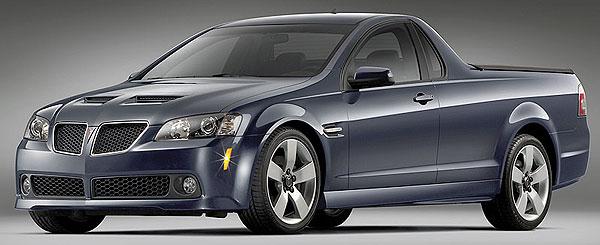
OK…we are being a little facetious, but the El Camino was popular and millions of Americans purchased them starting the year they debuted, 1959.  They are no longer made and aren’t that popular in the U.S., they were re-introduced in 2008 as the Pontiac G8ST. Unfortunately, Pontiac disappeared and the El Camino went with it.
Pontiac G8 ST which was never built

So, why is GM applying for a trademark for the El Camino and the old 1955 Nomad wagon?
Pure protection. 

GM is waiting for the U.S. Patent office to approve the trademarks on the names and says that since they are so iconic, they felt the need to make sure someone else doesn’t try to put the name on one of their automobiles.

What if an El Camino did resurface? Would you buy it? Why?