Showing posts with label brake fluid. Show all posts

Friday, September 6, 2013

Stop Winter Stopping Problems


OK, so the seasons are going to change.  We can’t stop that.  However, it’s not a bad idea to do something about your brakes so you can’t count on stopping during winter.  
Winter driving check brakes

Before we even talk about the brakes themselves, let’s make sure the brake fluid is at the proper levels.  Your brake fluid is the stuff that is actually moving the pistons around to apply pressure and make your brakes work.  Fluids will move slowly in the winter, and if the levels are off, that can add up to a number of problems.  The brakes themselves may be fine, but if the brake fluid is leaking, low, or just not there… you will definitely have some challenges. 
Another consideration are the shoes.  No… not the brake shoes, but your shoes.  Believe it or not, many accidents occur each year because people have on wet, slippery shoes.  Their feet slide off the edge, and there just isn’t time to recover.  So… dry your shoes. 
And, of course, know what type of brakes you have.  If they are standard brakes, you’ll need to pump them slightly on slippery roads.  If you have an anti-lock brakes (ABS), the brakes will do the pumping for you.  Just apply as normal, and always keep eye contact with the road. 
Yes, your brakes are important… but the other things around the brakes are just as vital.  Stay safe!

Thursday, June 6, 2013

Brake fluid, Unicorns, and Other Myths


The brake fluid is low… so just add some more, right?  We get that a lot at U.S. Automotive, but unfortunately brake fluid isn’t the same as coolant or even your oil.  If your brake fluid is low, something might be wrong. 
 
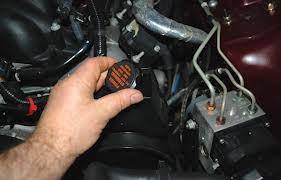
Topping off your Brake Fluid could mask larger issues

Here’s what’s going on:  As your brakes start to wear down, more fluid is needed to fill the caliper space.  You don’t need to know all those details, but you do need to know that just “topping off” the brake fluid could end up masking something important.

Brake fluid is actually helping the hydraulics in your system apply pressure to the brakes.  It’s a good idea to flush and change the brake fluid every couple of years, but it’s not always a good idea to just add some extra just so your little light goes off. 

If you do add some, it’s always important to release the old stuff when you have any work done on your brakes.  It’s the kind of thing that could make the difference between a nice parking job, and driving through the window of the flower shop.  As always, if you think something just doesn’t seem right, bring it on in and we’ll be happyto take a look.

Here’s to safe driving!

Friday, October 19, 2012

Forgetting the “Other Fluids”


It’s a simple, yet costly, mistake for any car owner – forgetting the other fluids that keep your car running. Sure, we all see the sticker on our windshield that reminds us to get the oil changed every 3-5 months or 3,000-5,000 miles. But, what about checking you coolant? How about the ATF (Automatic Transmission Fluid)? What do you think helps your brakes?

Checking ALL Fluids is a must!

Antifreeze is what absorbs the heat from the engine and radiates it out of the car. It’s either happened to us or we see someone on the side of the road, hood up, smoke pouring out. The number one cause of all roadside failures has to do with the coolant. Coolant needs to be replaced because, over time, the additives in the coolant break down and cause corrosion. We recommend flushing the cooling system every two years or at 30,000 miles. You can always ask one of our technicians to check to make sure everything is OK with the system.

Automatic Transmission fluid is a tricky thing. Similar to oil, it cleans and holds contaminates while also lubricating the transmission. It also has to handle high amounts of heat or extreme cold. Most ATF can handle upwards of 600 degrees Fahrenheit. But, some parts of the transmission can go beyond 800 degrees! The trick with ATF is to know what your car needs. Car makers use different types of ATF depending on the type of car and how the transmission is supposed to handle. Look at your owner’s manual, or ask us to take a look

Your brakes, by far, are the most important part of the car. We don’t need to tell you that. Half of all drivers in the US surveyed recently said their brakes failing is something they think about at least once when driving in the car daily. While there is some debate about brake fluid flushes, it is important to consider having it done. If you drive 10,000 miles a year, you will, on average, use your brakes about 75,000 times. Water can accumulate in the fluid which causes heating issues. Too much water means the fluid cannot handle the high temperature brakes cause. Water can also cause vapor issues. If you ever put your foot all the way down to the floor and the brakes are having a hard time taking hold, you have vapor issues with the fluid and need to get it flushed immediately.

We are all very busy. We forget to return phone calls, emails, to pick up groceries, etc. But, when it comes to safety, changing the fluids on your car shouldn’t be forgotten or put off!